



what is skin pass mill
/The skin pass mill represents a specialized finishing process in metal production that differs fundamentally from traditional rolling operations. Unlike conventional rolling mills that focus primarily on thickness reduction, the skin pass mill process serves a more refined purpose - enhancing surface characteristics and mechanical properties without substantial dimensional changes. This critical distinction forms the basis for numerous performance differences between these two metal processing approaches. The skin pass mill function goes beyond simple deformation, incorporating precise control of surface texture, flatness, and material structure to meet exacting end-use requirements in industries ranging from automotive to appliance manufacturing. S kin P ass R olling : Thickness Reduction vs. Surface Enhancement Traditional rolling mills are engineered primarily for significant thickness reduction, employing massive forces to transform slabs into thinner gauges through successive passes. In stark contrast, the skin pass rolling operation typically applies just 0.5-3% reduction, focusing instead on perfecting the strip's surface qualities. This fundamental difference in purpose manifests in several performance characteristics: Force requirements (skin pass mills use substantially lower rolling forces) Speed capabilities (skin pass operations often run at higher velocities) Roll configurations (smaller diameter work rolls are typical in skin pass mills) Surface finish precision (skin pass achieves superior texture control) The skin pass mill process achieves its effects through a delicate balance of tension and compression, creating just enough plastic deformation to modify surface characteristics while maintaining the strip's basic dimensional integrity. S kin P ass R olling : Surface Quality and Texture Control When comparing surface outcomes, the skin pass mill function provides capabilities far beyond traditional rolling. While conventional mills can produce acceptable surfaces for many applications, skin pass rolling delivers: Precisely controlled roughness profiles tailored to specific applications Elimination of yield point elongation that causes stretcher strains Improved surface reflectivity for aesthetic applications Enhanced coating adhesion properties The skin pass rolling operation achieves these results through specialized roll texturing techniques and carefully calibrated deformation parameters that traditional mills cannot replicate. This makes the skin pass mill indispensable for premium surface-sensitive products like automotive exposed panels or high-end appliance finishes. S kin P ass R olling : Mechanical Property Modification Beyond surface effects, the skin pass mill process significantly influences the mechanical properties of processed metal in ways traditional rolling cannot match. The controlled micro-deformation of skin passing: Eliminates discontinuous yielding behavior Provides more consistent hardness distribution Improves forming characteristics Enhances dimensional stability during fabrication These property modifications stem from the skin pass mill function of creating just enough plastic deformation to reorganize dislocations near the surface without substantially altering the bulk material properties. Traditional rolling, by contrast, affects the entire cross-section uniformly, often requiring subsequent annealing to restore desired characteristics. S kin P ass R olling : Operational Flexibility and Product Changeover The skin pass mill offers superior flexibility in handling diverse product requirements compared to traditional rolling mills. Key advantages include: Faster transitions between different surface finishes Quicker grade change capabilities Broader range of achievable surface textures More responsive adjustment to customer specifications This operational agility makes the skin pass rolling process particularly valuable for mills serving markets with diverse, rapidly-changing surface requirements. Traditional rolling mills, with their focus on massive throughput and substantial gauge reduction, are far less adaptable to such frequent product variations. S kin P ass R olling : Energy Efficiency and Resource Utilization From a sustainability perspective, the skin pass mill process demonstrates several advantages over conventional rolling: Significantly lower energy consumption per ton processed Reduced roll wear due to lower forces applied Minimal material loss during processing Lower coolant and lubrication requirements The skin pass mill function of producing value through precision rather than brute force translates to more efficient resource utilization throughout the operation. While traditional rolling remains necessary for primary reduction, skin passing provides the finishing touches with minimal environmental impact. S kin P ass R olling : Integration with Processing Lines Modern skin pass mill installations often demonstrate superior integration capabilities compared to traditional rolling stands. Advanced configurations may include: Direct coupling with continuous annealing lines Inline tension leveling systems Integrated surface inspection technology Automated texture monitoring and adjustment This level of process integration allows the skin pass rolling operation to serve as a vital link between metallurgical processing and final product requirements. Traditional rolling mills, by contrast, typically function as more isolated process steps within the production chain. S kin P ass R olling : Quality Assurance and Process Control The precision-focused nature of skin pass mill process demands - and enables - more sophisticated quality control approaches than traditional rolling. Modern skin pass mills typically feature: Advanced closed-loop flatness control systems Real-time surface topography monitoring Automated tension profile adjustment Predictive roll wear compensation These capabilities allow the skin pass mill function to maintain tighter tolerances on critical surface parameters than conventional rolling processes can achieve. The result is superior consistency in finished product quality, particularly for appearance-critical applications. The comparison between skin pass mills and traditional rolling mills reveals fundamentally different approaches to metal processing, each with distinct performance characteristics. While traditional rolling remains essential for primary gauge reduction, the skin pass mill process provides unparalleled capabilities in surface enhancement and mechanical property modification. The precision-focused skin pass mill function enables manufacturers to meet increasingly demanding surface quality requirements that conventional rolling cannot address. As end-user expectations continue to rise, the importance of skin pass rolling in delivering premium-quality finished products will only grow, ensuring its critical role in advanced metal processing operations worldwide. Understanding these key performance differences allows producers to optimize their mill configurations for both efficiency and quality in today's competitive markets.

We have successfully executed over 500
projects around the world,
many first-of-their-kind
research projects and products in China, including
We have successfully executed over 500
projects around the world,
many first-of-their-kind
research projects and products in China, including
-
2004
The 1st hydraulic AGC system for hot rolling of ribbon steel
-
2006
The 1st AFC system used for 1450mm skin pass mill
-
2009
The 1st 5-stand tandem line with 2-stand POR & Uncoiler for 650mm ribbon steel
-
2012
The 1st reversing mill for 1380mm strip
-
2016
The 1st soft-rolling system used in skin pass mill
-
2019
The 1st fully automated medium-width tandem cold rolling mill
-
2021
The 1st 5000KN Twin-stand double skin pass mill
-
2022
The 1st coupled pickling line & tandem cold mill with two modes - big roller & small roller
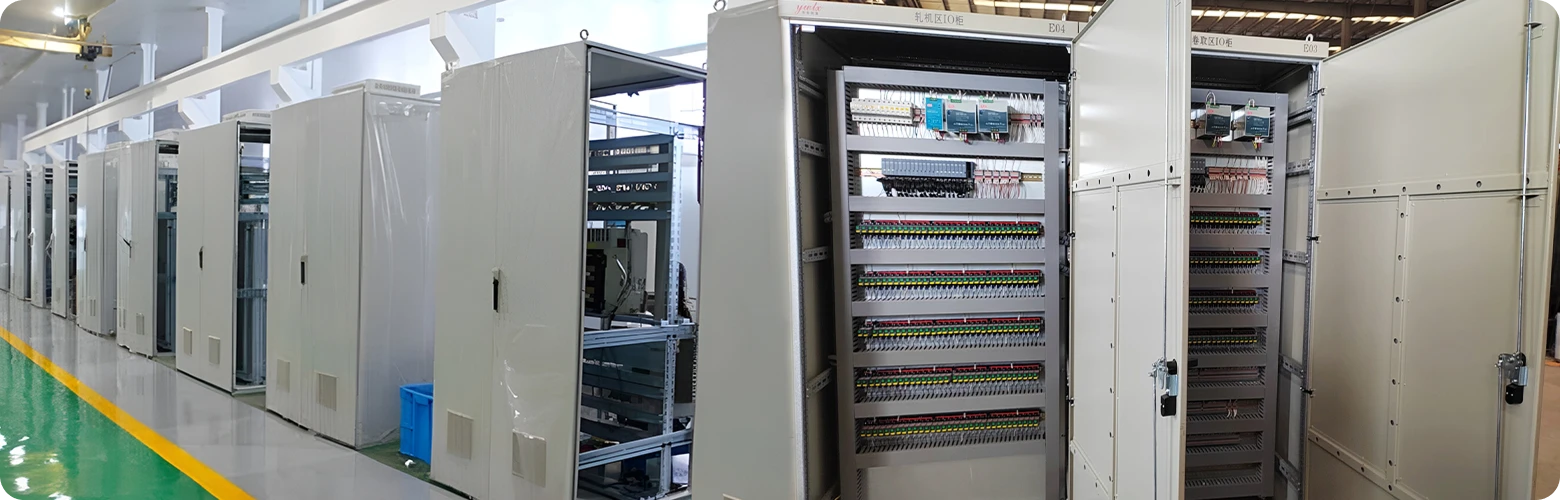
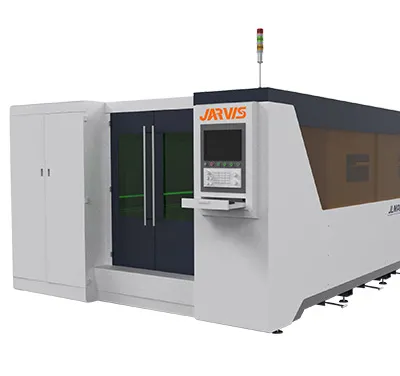

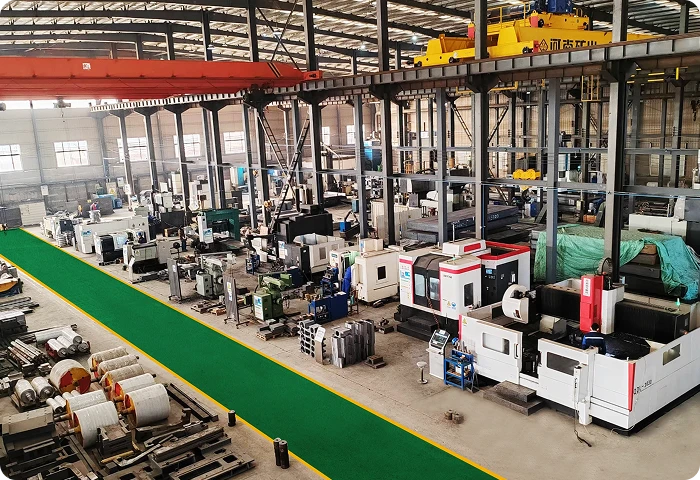
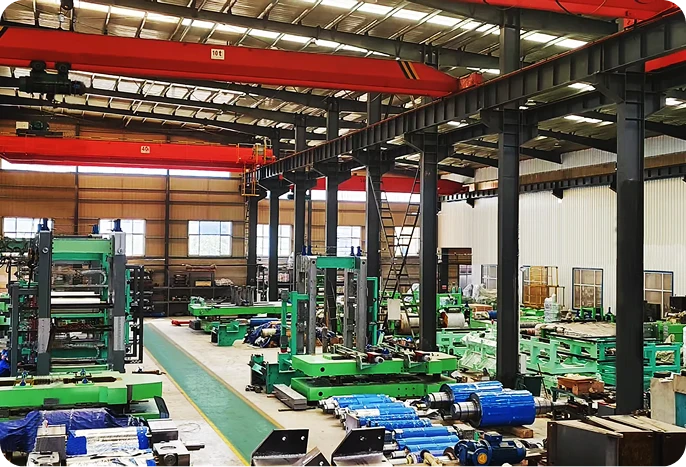
Yang Wang Li Xin operates a state-of-the-art facility over 66,000 square meters,and our manufacturing facility is fully equipped with high-tech machinery and high-capacity cranes. This enables us to handle large work pieces measuring 4.5m in width, 10m in length, and 1.5m in height, guaranteeing our capacity to produce 1800mm skin-pass mills and 1450mm rolling mills. The individual piece can weigh up to 100 tons.


Quality is fundamental to the enterprise survival. We have established a comprehensive and meticulous quality management system and have successfully obtained ISO14000 certification. Starting from the design source, it supervises the entire production cycle, including design, procurement, processing, assembly, in-factory testing, installation, and online commissioning. The workshop is equipped with measuring tools like vernier calipers, spectrometers, hardness testers, and ultrasonic flaw detectors. They are used to check materials and control tolerances to ensure the final equipment meets or exceeds requirements. All products have a unique code, This enables the easy identification and traceability of the equipment components and ensures full control of quality.


-
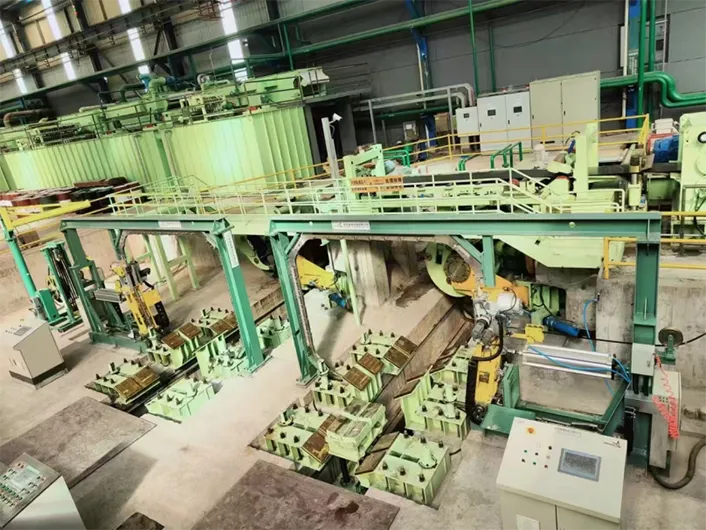 Impact of Digitalization and Automation in the Temper Pass Mill IndustryThe steel industry, particularly in processes like temper rolling and temper pass mills , has been undergoing significant technological advancements. With increasing demands for precision and efficiency, the integration of digitalization and automation has revolutionized these processes. These innovations are transforming the temper mill steel industry, ensuring more efficient operations, improved
 -
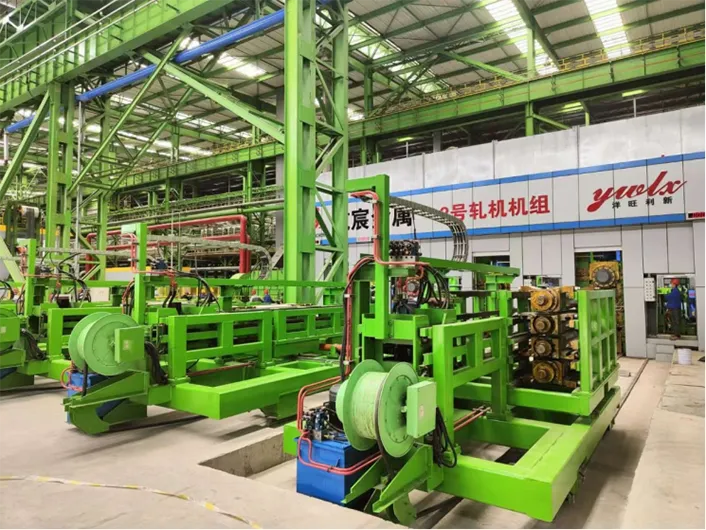 холодная прокатка полосыCold rolling of strip metal is a fundamental process in the manufacturing of high-quality metal products . This technique involves the rolling of metal strips at room temperature to achieve a denser material with improved surface finish and dimensional accuracy. With years of expertise in metal processing, I present the nuances of cold rolling that professionals in the industry recognize as crucia
 -
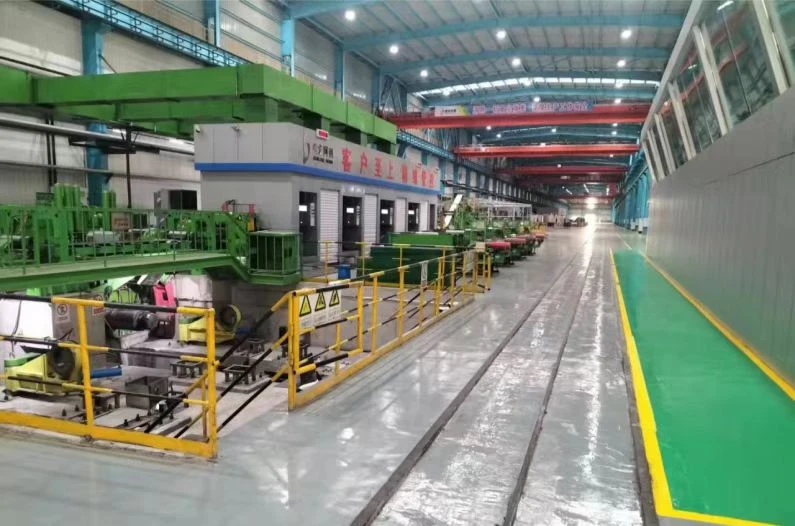 Cladding Rolling Mill - YWLX | Energy Efficiency High YieldIntroduction The Cladding Rolling Mill developed by Beijing Yang Wang Li Xin Sci&Tech Co.,Ltd. (YWLX) represents a significant advancement in the production of bimetallic and triple-metallic strips. This innovative technology addresses the limitations of traditional methods such as hot roll bonding cladding and explosive cladding , offering improved surface quality, energy efficiency, and cost-eff


